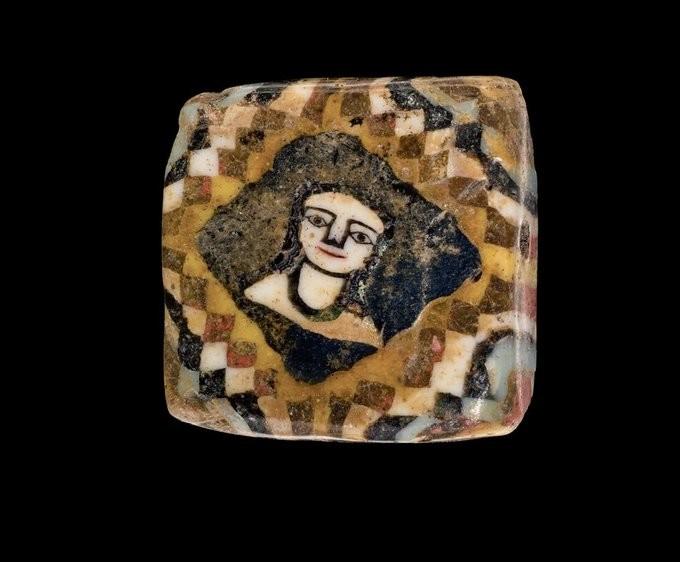
A #Roman face bead: the miniature human face was made either through the cold bundling of rods or the hot working of pre-made parts to form the visage, which was then stretched to make a cane that was cut into sections with identical faces.
-
A #Roman face bead: the miniature human face was made either through the cold bundling of rods or the hot working of pre-made parts to form the visage, which was then stretched to make a cane that was cut into sections with identical faces. This facial design had a relatively short production period between the 1st c. BC and the 1st c AD.
Overall W: 1.5cm
 Corning Museum of Glass
 -
A #Roman face bead: the miniature human face was made either through the cold bundling of rods or the hot working of pre-made parts to form the visage, which was then stretched to make a cane that was cut into sections with identical faces. This facial design had a relatively short production period between the 1st c. BC and the 1st c AD.
Overall W: 1.5cm
Corning Museum of Glass@ninawillburger I once tried this technique with polymer clay (much easier than glass, of course). Since then I know how much craftsmanship and ingenuity are behind these beads.
-
A #Roman face bead: the miniature human face was made either through the cold bundling of rods or the hot working of pre-made parts to form the visage, which was then stretched to make a cane that was cut into sections with identical faces. This facial design had a relatively short production period between the 1st c. BC and the 1st c AD.
Overall W: 1.5cm
Corning Museum of Glass@ninawillburger Mona Lisa
-
 A angelacarstensen@mastodon.online shared this topic